7: Dance Partner?
Ballroom Dancing
A Beginner's Guide
Part 7
What to Expect from this Series
What to Expect from this Series
Have you ever wanted to try ballroom dancing but needed to know where to start?
Well, this is the place to begin if you want to learn. This series of articles is your gateway to the joy of partner dance! We explore, from a newcomer's eyes, that wonderful world of movement, partnership, and music. We aim to give you a good foundation of knowledge to start your dance journey and experience the sheer delight of ballroom dancing.
The number of dance styles in ballroom dancing can be confounding, not to mention the confusing terminology or how to make sense of it all. This series will clarify things for you and answer (we hope) most of your questions. We should note that this series is for those wanting to social dance—and perhaps eventually compete even—it is not geared towards one-time learning like those wishing to do a choreographed dance at their wedding, for example.
Delve into the mesmerizing world of ballroom dancing with this comprehensive series of articles designed to guide beginners through the exhilarating realm of partner dancing. From decoding the intricate dance styles and terminology to unraveling the nuances of selecting the perfect dance shoes, these articles provide a detailed and immersive introduction to the captivating art of ballroom dancing. As you master each dance style, you'll feel a sense of accomplishment that will keep you motivated, whether your interest lies in social dancing or you aspire to compete professionally.
Do You Need A Dance Partner?
Do You Need A Dance Partner?
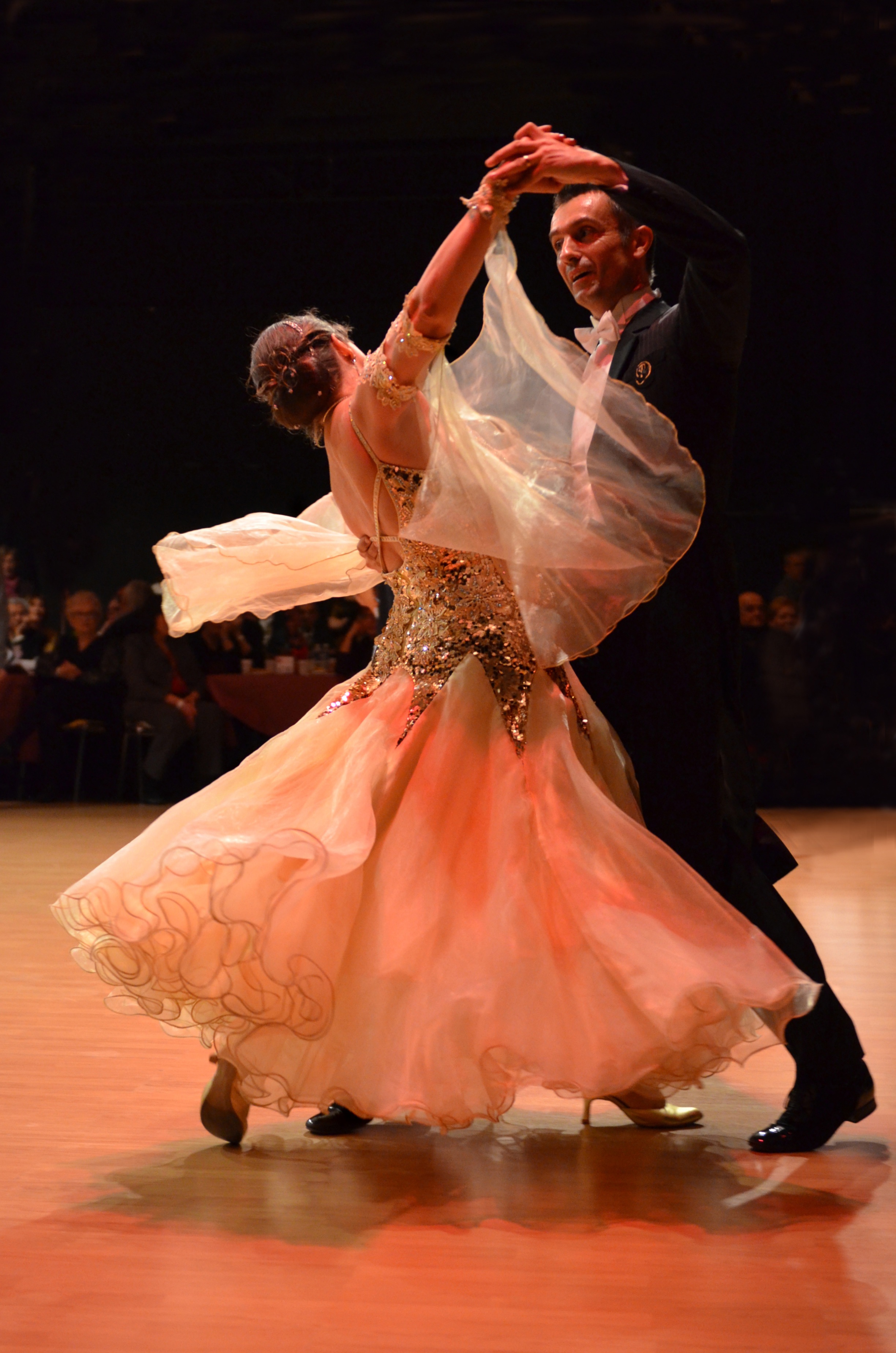
Indeed, A Partner can Help...
Indeed, A Partner can Help...
The short answer, however, is NO.
You do not need a partner to learn ballroom dancing. The long answer depends on how you want to evolve as a dancer. Yes, if you are a serious dancer. In this article, we discuss partnering and why you will want a partner for the long term.
You do not need a partner if you are just a beginning dancer or a newcomer to ballroom dancing. It is optional—a nice-to-have. However, there are advantages to having a partner at this stage. First, you know that you will have someone familiar with whom you can learn. It is less stressful.
A formal partner is optional for a beginner. Teachers often pair beginning dancers with others round-robin in a group class setting. Switching partners and dancing with two, three, or four students during a group lesson is joint.
So, would you like a partner at this beginning stage? The answer can be either way, but it leans towards the "optional" side.
If you have a few dance figures or months of lessons under your belt and are no longer a "newcomer" in the strict sense of the word, a partner can significantly enhance your learning experience and progress.
A standard metric in ballroom dance is that for every hour of lessons, you should practice what you learned for at least three to five hours. The idea is to embed what you saw, heard, and practiced in class into your so-called "muscle memory." While you can practice dance moves by yourself (and we highly recommend that you do so), practicing with another who has gone through the same lesson (or is familiar with the subject, at least) will benefit you. Make no mistake, though. Practicing alone hones your Individual Technique and will only elevate your dancing; it is a crucial learning component and an excellent discipline to implement frequently. But ballroom dancing is implicitly a partner dance. So, you'll need to learn how to coordinate your movement with another. In other words, how to "read" and respond to your partner. And that requires the presence of an active partner working with you to polish the moves you learned.
In Conclusion...
Do you need a partner to learn ballroom dancing? Not when you are beginning, although having someone to work with is ideal. If you have advanced a bit in your studies and wish to continue and polish your movement for the long term, find someone at your level who can practice with you.